
Contact: Anthony Rodriguez (614) 466-9547
COLUMBUS, Ohio – March 6, 2012 – Proposals from American Electric Power (AEP) to increase capacity charges and to begin charging customers about $540 million in deferred costs should be denied by the Public Utilities Commission of Ohio (PUCO), the Office of the Ohio Consumers' Counsel (OCC) said in two separate filings submitted to the PUCO.
Capacity charges are the rates charged to retail electricity suppliers to maintain sufficient generating capacity to meet customers' demand for electricity. These charges are paid by the competitive retail electric suppliers that compete with AEP for selling electricity to AEP's customers, including residential customers.
AEP's new proposal is to charge a rate of $255 per megawatt-day for capacity, the same rate proposed in its electric security plan settlement rejected by the PUCO in February. But the current market prices for capacity are only about $110 per megawatt-day through May 2012, $16.46 per megawatt-day from June 2012-May 2013, and $27.73 per megawatt-day from June 2013-May 2014. Market prices are required until a new AEP rate plan is approved, according to both the PUCO's entry that rejected the settlement and as stated in yesterday's OCC filing. The OCC did not sign AEP's earlier settlement that included the higher rates for capacity charges.
AEP's new proposal for higher capacity charges is based on its claims that the Company will be financially harmed by the PUCO's decision to reject the settlement. But AEP's recent financial results in Ohio reveal a different story.
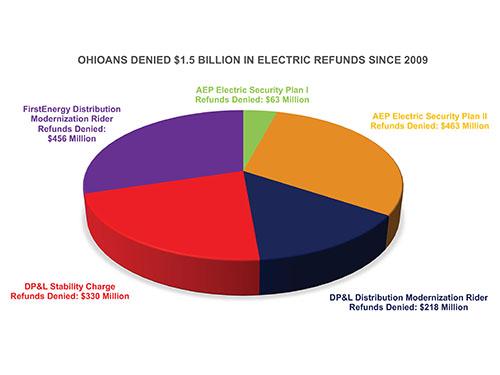
In February 2011, the Supreme Court of Ohio held in a 7-0 decision that AEP was improperly given permission by the PUCO to retroactively collect $63 million from customers as part of its rate plan that covered 2009-2011. The Court also said the plan included more than $500 million in charges that were not supported by the evidence presented to the PUCO. Only a small portion of those charges were later returned to customers by order of the PUCO. And AEP's Columbus Southern Power utility earned profits that eclipsed the PUCO-determined significantly excessive earnings threshold of 17.6 percent in 2009, resulting in the utility being required to return $43 million to customers. Earnings also could surpass the PUCO's threshold for excess earnings for 2010 and 2011.
Allowing AEP to increase the capacity charges that its competitors must pay will harm the competition that can provide customers in Ohio with lower electricity prices. AEP's proposal is contrary to state policies put in place to ensure reasonably priced retail electric service and a diversity of electricity supplies and suppliers, the OCC said in its filing.
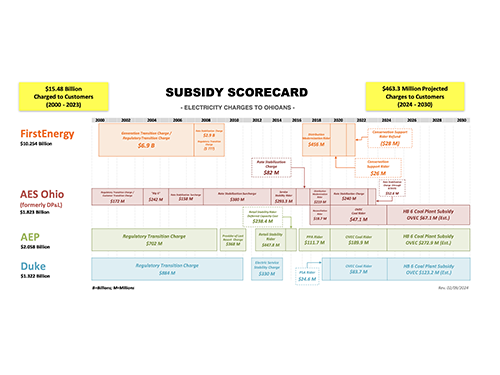
In a separate filing today, the OCC asked the PUCO to deny AEP's request to begin collecting approximately $540 million from customers for "phased-in recovery" charges, representing costs that were deferred years ago for later collection from customers. AEP was to seek approval before actually collecting the deferred costs from customers. AEP has not been given approval to date, but nevertheless included the charge in its revised rates.
These deferred costs are directly related to appeals the OCC and the Industrial Energy Users- Ohio have filed with the Supreme Court of Ohio. The appeals seek to provide customers with a return of the $367 million (plus carrying charges) of unjustified provider-of-last-resort charges they paid from April 2009 through May 2011. These provider-of-last-resort charges helped to create AEP's deferrals and should be offset against the deferrals that are yet to be collected from customers. Both the Supreme Court and the PUCO previously ruled that AEP did not provide sufficient evidence that it should have been allowed to collect the money from customers. The PUCO, however, stopped short of crediting customers for the unjustified payments.
The most direct protection the PUCO can now offer customers is to use market-priced capacity charges that will allow for greater competition and to return AEP's unjustified charges to customers, the OCC said in its filing.
End of Page